
Need a product carbon footprint?
- Supports all major standards – From quick LCAs to full EPDs, including TM65, PCDs, and ISO-compliant reports.
- Fast, accurate results – Get product footprints in minutes (not months) with built-in databases and AI-powered workflows.
- Tailored to your industry – Whether you're in construction, manufacturing, or healthcare, we’ve got the right method for you.
- Verified and ready to share – Publishable, client-ready outputs that meet tender, regulatory, and customer expectations.
Talk to an expert today!




Easy EPD – The cheapest and fastest EPD solution
An EPD is an independently verified document that outlines a product’s environmental impact across its entire lifecycle. While it’s mainly used for business-to-business communication, consumers are increasingly checking EPDs to make more informed choices about the products or services they buy.
For companies, EPDs are a great way to showcase sustainability efforts, meet environmental targets, and demonstrate a commitment to reducing their impact to customers and stakeholders alike. Research shows that companies with an EPD close 23% more tenders than the ones without one.
Our carbon accounting platform will help you streamline EPD reporting, making the process pain-free.
100% guaranteed compliance
We will help you create an LCA of your product, we will verify it and once it is approved by a third-party we will help you publish it into the EPD International site.
AI-enabled platform
We have trained our AI to help you draft your report, saving you months of time compared to manual drafting. With built-in workflows in our platform we ensure comprehensive coverage of all EPD reporting requirements.
The cheapest and fastest solution
Enistic AI makes the process easier and faster, reducing months of work into weeks. Our EPD experts are always available to help you should you have any questions or require any help.
What Product Carbon Footprint do I need?
Types of Carbon Footprint certifications
1
LCA
An LCA provides a quick and straightforward estimate of a product’s carbon footprint, using the IPCA (International Product Carbon Association) database and the general principles of ISO 14040. It focuses only on the materials used in the product and excludes transport, manufacturing processes, use, disposal, or recycling. Because it doesn’t involve third-party verification or publication, it’s ideal for internal use or for responding to informal client enquiries where a rough estimate is sufficient. You’d choose this when you need speed over precision and don’t require public or verified results.
Best for: Quick internal estimates or informal client requests.
2
TM65
TM65, developed by the Chartered Institution of Building Services Engineers (CIBSE), is specifically designed for mechanical, electrical, and plumbing (MEP) products within the built environment. It comes in two levels: Basic, which focuses solely on material-based emissions, and Medium, which expands to include transport, partial manufacturing processes, and end-of-life scenarios such as disposal and recycling.
Both formats use standardised inputs and outputs recognised across the UK construction sector, and provide a credible, accessible method for assessing embodied carbon in building services equipment. TM65 is ideal when a full EPD would be excessive, but stakeholders still need structured, sector-specific carbon data.
Best for: MEP manufacturers supplying the construction sector who need recognised carbon data without the complexity of a full EPD.
3
PCD
A PCD offers a mid-level solution between simple estimates and full Environmental Product Declarations. It includes manufacturing, transport, and recycling stages, but excludes use and disposal. It is based on simplified product category rules (PCRs) under the IPCA R1 standard, making it easy to apply and fast to complete, while still producing verifiable and publishable results.
It’s a smart choice if your clients need a credible, transparent figure that can be shared with customers, specifiers, or regulators — but without the cost and time of a full EPD.
Best for: Companies needing verifiable, shareable carbon data without the full commitment of an EPD.
4
EPD
An EPD is the most comprehensive and rigorous standard, following strict ISO requirements and verified by independent third parties. It covers the full life cycle of the product: raw materials, manufacturing, transport, use, end-of-life, and recycling, depending on the product category rules (PCRs).
The data must come from approved databases like Ecoinvent, and the process typically takes several months and includes publication on official registries. You’d choose an EPD when working with architects, government tenders, or BREEAM/LEED projects, or where formal carbon reporting and trust are essential.
Best for: High-value products needing trusted, externally verified carbon data for tenders or certification.
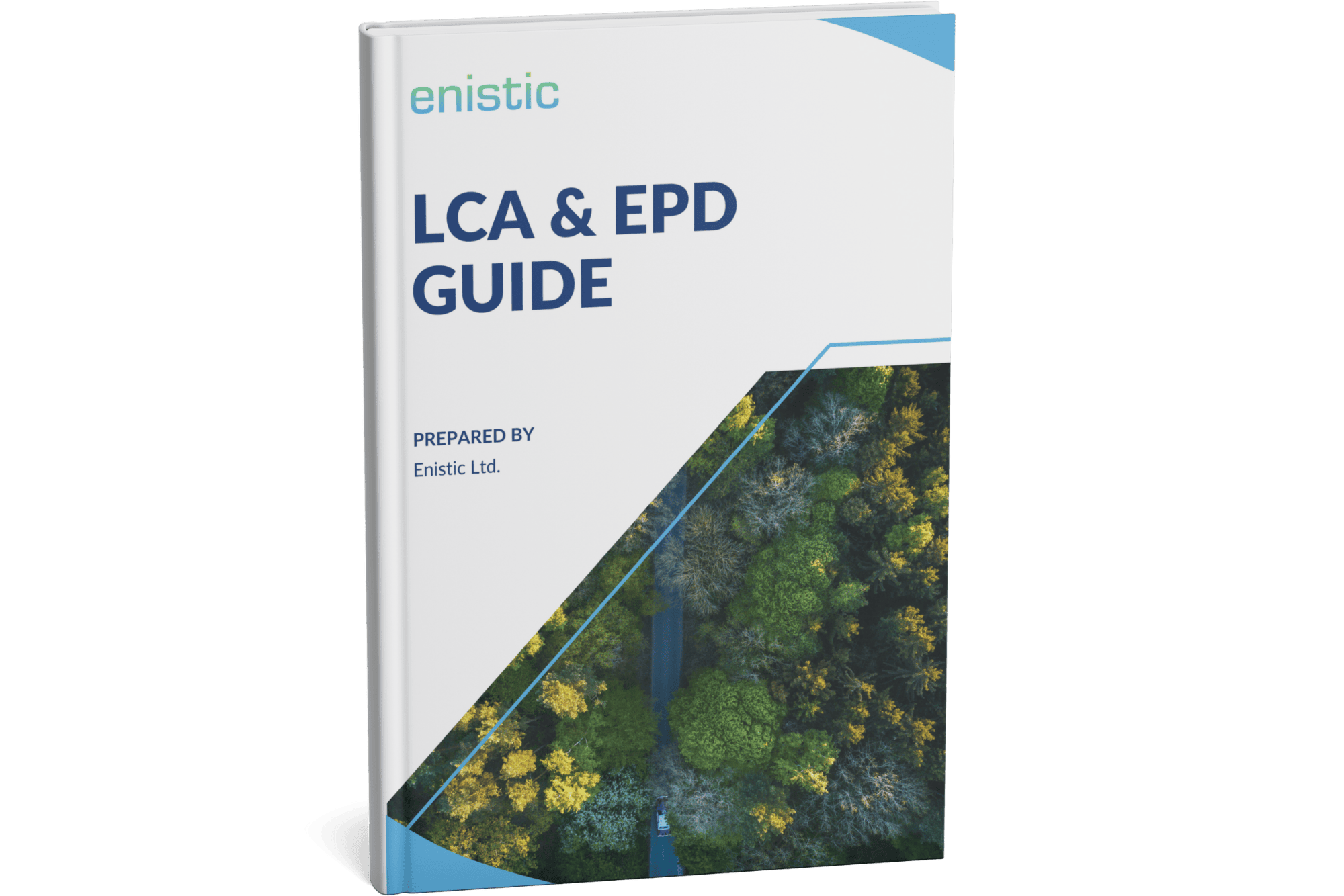
Download our free EPD guide here
Book a demo
Talk to our team to:
- Explore how Enistic is effectively used by companies to track, analyse, and report their carbon emissions.
- Discover seamless methods for data gathering and integrating Enistic into your team's daily workflow with minimal disruption.
- Seek custom solutions and receive tailored support.
- Explore pricing options suitable for your company and your needs.
Why choose Enistic
We combine AI-enabled software with real expertise to help organisations cut through the complexity of carbon reporting and sustainability planning. With Enistic, you get more than just a platform, you get a partner. We’re trusted by over 300 businesses to deliver accurate data, clear insights, and tailored support that makes a real difference. Whether you’re aiming for compliance, Net Zero, or better stakeholder engagement, we’re here to help you get there without the jargon, and without the hassle.

Measure
Baseline emissions are a record of the greenhouse gases that have been produced in the past and are the reference point against which emission reductions can be measured.

Aims and targets
Targets allow you to judge whether the plans you made to reduce your carbon emissions are working, and whether the reductions achieved are meaningful.

Reduce
Select best carbon reduction projects for you and your business, based on your values, the cost, and likely payback time.

Track
Track your carbon emissions to reflect the changes and compare how well you are doing against the targets.

Offset
Offset schemes work by paying volunteers, companies or charities to do things which ‘negate’ your carbon emissions, for example, planting trees.

Certify
Certification is a valuable process that provides checks and balances for the sector.
LCA vs EPD – What’s the difference?
An LCA demonstrates the environmental impact of your product at every stage of its life cycle. It is the foundation stage of any EPD and it provides a framework for measuring the environmental impact of a product, by looking at all stages of the production process, from raw material extraction, manufacture, transport, use and maintenance, to disposal and recycling.
To become an EPD, your LCA must adhere to stricter regulations and product category rules. The LCA has to go through a series of rigorous checks and be verified by an external third party arms length verifier.
Frequently asked questions – LCAs & EPDs
Who needs an EPD?
Any business that wants to improve its sustainability and reduce its carbon footprint can benefit from an EPD. EPDs are primarily intended to facilitate business-to-business transactions, although they may also be of benefit to consumers who are environmentally focused when choosing goods or services.
An EPD is particularly beneficial to your organisation if looking to achieve a sustainability rating for a project, such as BREEAM (Building Research Establishment Environmental Assessment Method), or if your looking to advertise your product or service as ‘environmentally friendly.’
What is the difference between LCA and EPD?
LCAs analyse a product’s environmental impacts across its life cycle (raw materials, production, use, end of life) and can vary in scope and depth. It is typically used internally for sustainability insights.
An EPD is a standardised, third-party-verified version of an LCA that follows specific Product Category Rules (PCRs). EPDs are externally validated and designed for public disclosure, providing transparency for stakeholders.
Want to know which ones is best for your business?
How long does it take to get an EPD?
The time it takes to get an Environmental Product Declaration (EPD) depends on the complexity of the product and the readiness of data. Generally, the process can take anywhere from a few months to a year.
What standards are used for LCAs?
LCAs are conducted according to ISO 14040 and ISO 14044 standards.
What are Product Category Rules (PCRs)?
PCRs are specific guidelines that define how to conduct the LCA and what to include in the EPD for a product category.
Frequently asked questions - Enistic
Who are you?
We are Enistic Limited, based in Oxford, UK. Since 2002, we have been producing carbon accounting software to help businesses reduce their carbon footprint and adopt more sustainable business practices. We focus on helping larger companies comply with different sustainability reporting requirements and fight climate change. We are stable, profitable, and growing.
Most of the clients we deal with are still with us almost a decade after they started using us, so we must be doing something right!
Does your system handle Scope 3?
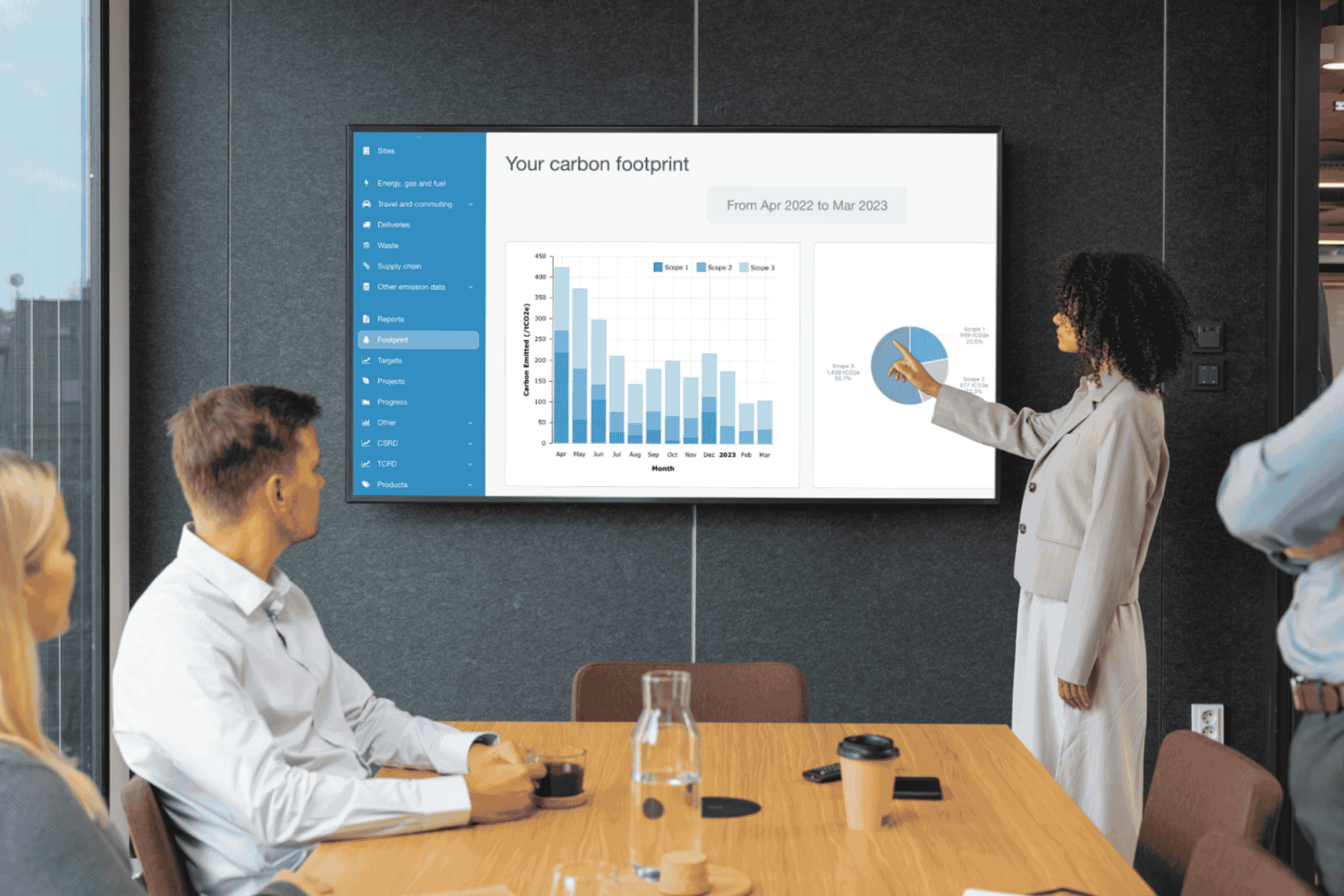
Yes. Enistic handles all Scope 1, Scope 2, and Scope 3 sections of the Greenhouse Gas Protocol (“GHG Protocol”).
Can I generate legally compliant reports from the Enistic system?
Yes. We have produced and filed over 5,000 fully compliant legal reports. The system is tried and tested and 3 of the Big 4 accountancies have audited the reports over the past few years.
What standards does the Enistic software comply with?
The Enistic software is heavily standards based and complies with most standards that you will need in day to day use. This includes: ESRD, ISSB, IFRS S2, CSRD, ESOS, SECR, Science-Based Targets, GHG Corporate Accounting Standard, PPN 006, GHG Corporate Accounting Standard Including Value Chain, ISO15804, ISO1404, ISO20121, BS:EN 16274, and ISO5002.
Is the system available in languages other than English?
The Enistic software is available in English, French, German, Italian, Spanish, and Simplified Chinese. If you need another language, please contact us to discuss.
How many factors are built into the system?
Enistic maintain a large database of UK and EU government approved conversion factors. There are over 40,000 factors built in, including in the software that cover fuel types, vehicle types, energy types, product composition, raw materials, and company annual emissions. Factors are updated promptly if annual updates are issued by the relevant authorities.
Are you on Social Media and/or any other channels?
Yes, we have a YouTube channel aimed at sustainability professionals called the Carbon College. You can also find us on LinkedIn.
Testimonials


Why Enistic

Our news

About us
Book a demo
Talk to our team to:
- Explore how Enistic is effectively used by companies to track, analyse, and report their carbon emissions.
- Discover seamless methods for data gathering and integrating Enistic into your team's daily workflow with minimal disruption.
- Seek custom solutions and receive tailored support.
- Explore pricing options suitable for your company and your needs.