
A QUICK GUIDE to SECR

October 14, 2021

In this 10-minutes video, you will learn all you need to know about SECR and how to comply with it. Learn what is SECR, who needs to comply with it, and when do you need to do it.

Who needs to comply with SECR?

If your company is classed as “large” in accordance with the Companies Act 2006 you will need to carry out SECR compliance and provide a record in your end-of-year accounts.

“Large” companies are those that meet 2 out of the 3 following criteria you will need to do an SECR report:

  • A turnover over £36m
  • A balance sheet over £18m
  • More than 250 employees

In addition, all UK quoted companies (MGHG) will need to submit an SECR report.

Businesses that use less than 40MWh over the reporting period are exempt, but a statement confirming your energy use at this level still needs to be included. Public sector organisations are exempt from having to submit SECR reports.

Why should I use a software?

To comply with SECR you will need to do a lot of calculations. It is really important to be accurate with the data collection. Climate change data is as important as financial data, so it will need to be complete, accurate and timely.

You can collect this data manually, through a consultancy, or with a software. Doing it manually is your lowest cost option, but it is easier that you make mistakes or forget some data. Using a software is the best option in terms of cost-time balance. It will require you to enter the data, but top software check if you are missing data or if it is not correct. Moreover, those software contain checklists that will ensure you don’t forget any data. 

Using a software will also help you to check which projects are going to be more effective for your company.You only need to upload all the data to the software (you can check what data do you need on the SECR Checklist dashboard). Once you have submitted everything to PLATO, you can request your report. Our experts will review it before handling it to you.

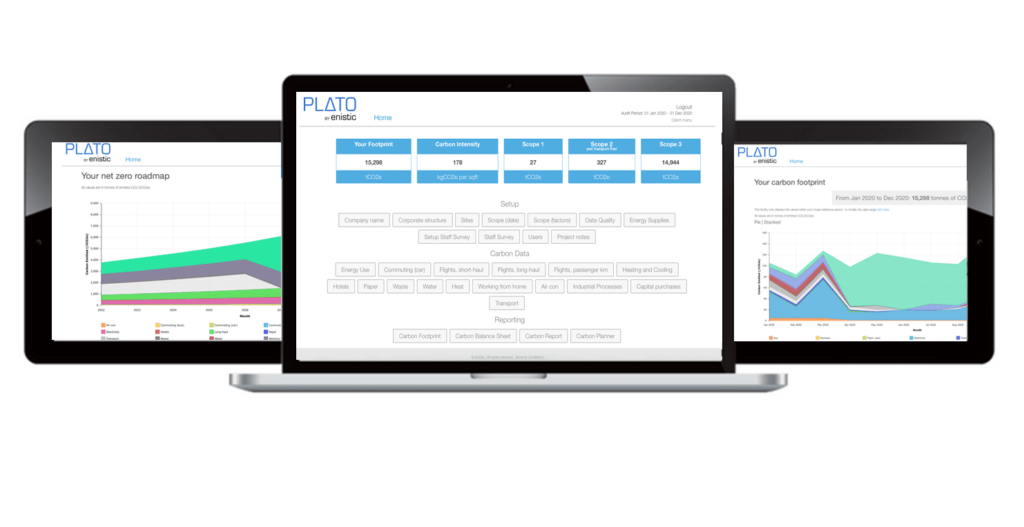
PLATO is the professional cloud-based software that allows you to comply with SECR. It is easy to use and you can request help from our team anytime. Moreover, it gives you the opportunity to enhance your company’s energy and cost efficiency through advanced software.


Learn about Enistic


Book a free consultation

Contact one of our lead assessors today and book a free consultation to see how Enistic can help you with SECR Compliance. We will make the processing time and cost-effective. ensuring you move forward, informed, empowered, and confident that you have control.


Book a demo

Talk to our team to:

  • Explore how Enistic is effectively used by companies to track, analyse, and report their carbon emissions.
  • Discover seamless methods for data gathering and integrating Enistic into your team's daily workflow with minimal disruption.
  • Seek custom solutions and receive tailored support.
  • Explore pricing options suitable for your company and your needs.

Our Latest Blog Posts

Why Waiting on PPN 006 Could Cost You NHS Contracts

If your organisation bids for NHS contracts, 2026 is the year to act on carbon reporting. From April 2027, the requirements under PPN 006 are expanding significantly. The businesses that wait until the deadline will find themselves under real compliance and resource...

UK SRS S1 and S2 Finalised: Preparing for the 2027 Transition

Last month, the UK Sustainability Reporting Standards (UK SRS) were formally published by the UK government, marking a significant milestone in the evolution of corporate sustainability reporting. Although sustainability disclosures have been developing for several...

Why Product Carbon Footprints are Becoming Essential in 2026

From 2026 onwards, buyers, regulators and investors are asking a more direct question about sustainability. Not just how much carbon your organisation emits, but how much carbon do each of your products emit. Organisational carbon footprints are no longer enough....

Defining Good Carbon Reporting: What Our Clients Are Doing Right

There is no single definition of strong progress. It is shaped by sector, regulatory pressure, organisational complexity and commercial priorities. A manufacturer responding to customer requests will look very different from that of a public sector supplier navigating...

CCAs: The Smart Route to Lower Costs and Lower Carbon

For years, many businesses only considered Climate Change Agreements as a mechanism for reducing the cost of the Climate Change Levy. As the UK moves further into its net-zero transition, Climate Change Agreements (CCAs) are shifting from simple tax relief instruments...

What PPN 006 Means for NHS Suppliers in 2026

From 2026, PPN 006 will play an increasingly important role in how sustainability, carbon reduction, and supplier accountability are assessed across NHS procurement. PPN 006, although presented as a procurement policy notice, represents a wider shift in how the NHS...

Digital Product Passports

From 2026, Digital Product Passports (DPPs) are set to transform how sustainability, transparency, and product responsibility are managed across Europe. DPPs are not just another regulation to tick off your checklist. It is a fundamental shift in how product...

Compliance Changes Coming in 2026

2026 marks the turning point for EU sustainability regulation. For businesses operating in, exporting to, or supplying the EU market, the next 12-24 months are a key preparation window. Early action lowers future compliance costs, strengthens data quality, and...

The True Carbon Use of AI – Why the Numbers May Surprise You

Artificial Intelligence (AI) has recently emerged as a focal point in global sustainability discussions. The narrative frequently leans towards disaster, with headlines claiming AI will drain national power grids or exacerbate water scarcity in regions hosting data...

Smarter Savings: How Enistic AI Estimates Energy, Carbon and Cost Savings

Selecting the right energy-saving project is often far more complex than it first appears. Organisations face an overwhelming list of options, each with their different costs, operational implications, and expected savings. Without solid data, it can be extremely...
Loading...