
How Your ESOS or SECR Report Gets Signed Off

September 4, 2026
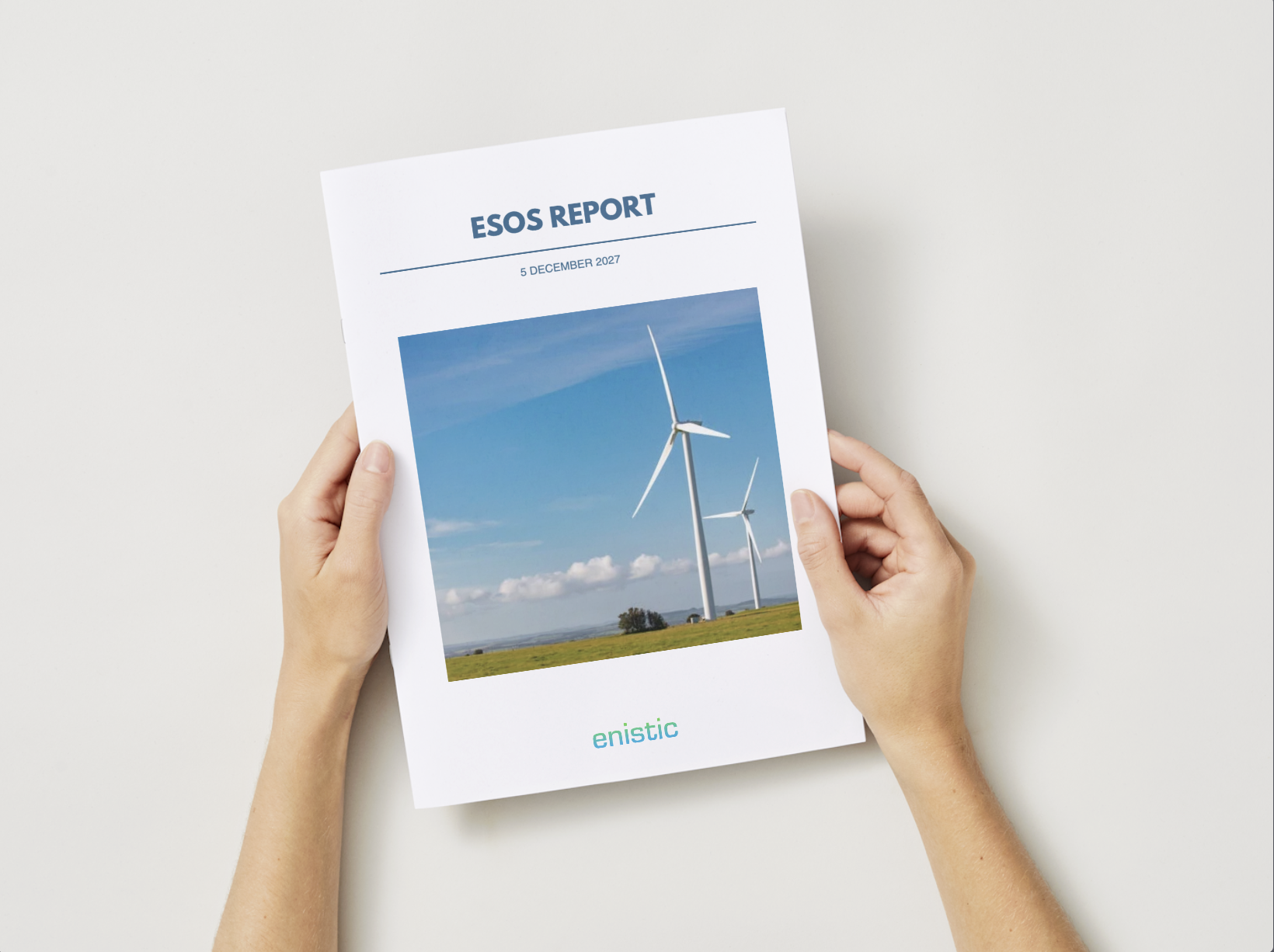
Example of an Enistic ESOS compliance report

By the time a report reaches its final form, whether for ESOS, SECR, or another framework, it has been through data collection, calculation, and review. But before it’s ever submitted, one more step happens: sign-off by a qualified person. This post explains what that step actually involves, and why it exists.


What Sign-Off Means

Sign-off is the point at which a qualified expert, an ESOS Lead Assessor for ESOS reports, a carbon consultant or auditor for other frameworks, formally reviews and approves your report before it is submitted or published. This isn’t a formality. It’s a legal requirement for ESOS, and good practice across every framework Enistic supports.

 

What The AI Has Already Done By This Point

Enistic AI has collected your activity data, matched it to the correct emission factors, calculated your emissions across the relevant scopes, and flagged any gaps or inconsistencies along the way. By the time a report reaches sign-off stage, the groundwork is largely complete and organised.

 

What The Reviewer Actually Checks

Your named consultant or Lead Assessor reviews the report for:

  • Completeness: is all required data present, and are any flagged gaps resolved
  • Accuracy: do the figures look correct and consistent with what’s expected for your business
  • Compliance: does the report meet the specific requirements of the framework it’s being submitted under
  • Context: does anything need explaining or caveating before submission, based on knowledge of your business that a system alone wouldn’t have


Why A Human Expert, Not Just Enistic AI

Enistic AI is very effective at processing data and applying rules consistently. It is not a substitute for professional judgement, understanding unusual circumstances, or taking legal responsibility for a report’s accuracy. That’s why every report carries a named person’s sign-off, not just an automated output.



What Happens After Sign-Off

Once signed off, your report is made available on the Enistic platform, ready to download and submit to the relevant body, for example the MESOS system for ESOS. You get a report you can stand behind, because someone with the right expertise already has.


Why This Matters

This is also the foundation of Enistic’s 100% compliance record across more than 5,000 reports since 2002. That record isn’t just down to good software, it’s down to a qualified person checking every single report before it goes anywhere.


Book A Demo

Book a demo

Talk to our team to:

  • Explore how Enistic is effectively used by companies to track, analyse, and report their carbon emissions.
  • Discover seamless methods for data gathering and integrating Enistic into your team's daily workflow with minimal disruption.
  • Seek custom solutions and receive tailored support.
  • Explore pricing options suitable for your company and your needs.

Our Latest Blog Posts

SECR Software vs Carbon Accounting for UK PLCs

Most UK PLCs do not have a SECR problem. They have a data problem that shows up once a year in the annual report. Streamlined Energy and Carbon Reporting (SECR) sets the legal minimum for quoted companies: global Scope 1 and 2 emissions, energy use, an intensity ratio...

Who Can Help With CSRD Compliance in the UK

The EU's Omnibus I package has cut the number of companies caught by the Corporate Sustainability Reporting Directive (CSRD) by roughly 90%. For UK businesses, that has turned the question around. It is no longer "how do we comply?" but "do we need to, and if so, who...

How to Build a Supplier PCF Data Survey in 2026

Most supplier data surveys fail in a predictable way. You send a request to four hundred suppliers. Ninety reply. Of those ninety, a third send a corporate emissions figure instead of a product one. Several attach an environmental product declaration for a similar but...

SORP 2026: What The New ESG Reporting Rules Mean For Your Charity

If your charity's financial year started on or after 1 January 2026, your first SORP 2026 reporting year is already underway. That matters, because the data your trustees will need to report is being created right now. It's sitting in your energy bills, travel claims,...

SECR Software vs Carbon Accounting Platforms: Which Should UK Manufacturers Choose?

If SECR is the only emissions obligation your business will ever face, dedicated SECR software will do the job. Very few UK manufacturers are still in that position. Customers are sending Scope 3 questionnaires. EU buyers want embedded emissions data. Public sector...

Blues Go Green: Measuring the Carbon Footprint of a Birmingham City Matchday

Ask most football clubs how much carbon a matchday produces, and they could probably give you an estimate. However, very few could give you a measured number. Blues Go Green set out to change that. What is Blues Go Green? Blues Go Green is a partnership between...

How To Get Supplier PCF Data for EPDs and LCAs

You have commissioned an EPD. Data has been collected. The LCA practitioner starts building the model and comes back with a list: this supplier figure covers different modules, that one was calculated under the previous version of the standard, this one has expired,...

ESOS Phase 4 Costs and Deadlines in the UK for 2026

Most organisations think of ESOS as just an audit, a signature, or a notification, often filed and forgotten for four years. The ones getting value from it treat the audit as the input to something else. Phase 4 asks you to identify cost effective energy savings...

How to Measure Supply Chain Emissions for CSRD

Measuring your supply chain emissions and producing a CSRD ready disclosure are two different jobs, and the second one is where most programmes stall. A number in a spreadsheet is not a disclosure. Under CSRD you have to justify why you reported that category at all,...

What Is Scope 3 Emissions Measurement in 2026

Scope 1 and Scope 2 are, by comparison, easy. You own the boilers. You pay the electricity bills. The data exists somewhere in your organisation and someone can go and find it. Scope 3 is different, because it sits almost entirely in other people's businesses. Your...
Loading...
BICS Application £35 to £40 per MWh off your electricity bill, every year for five years. Government relief for UK manufacturers. Applications run from 1 October to 30 November 2026.Check if you qualify
+