
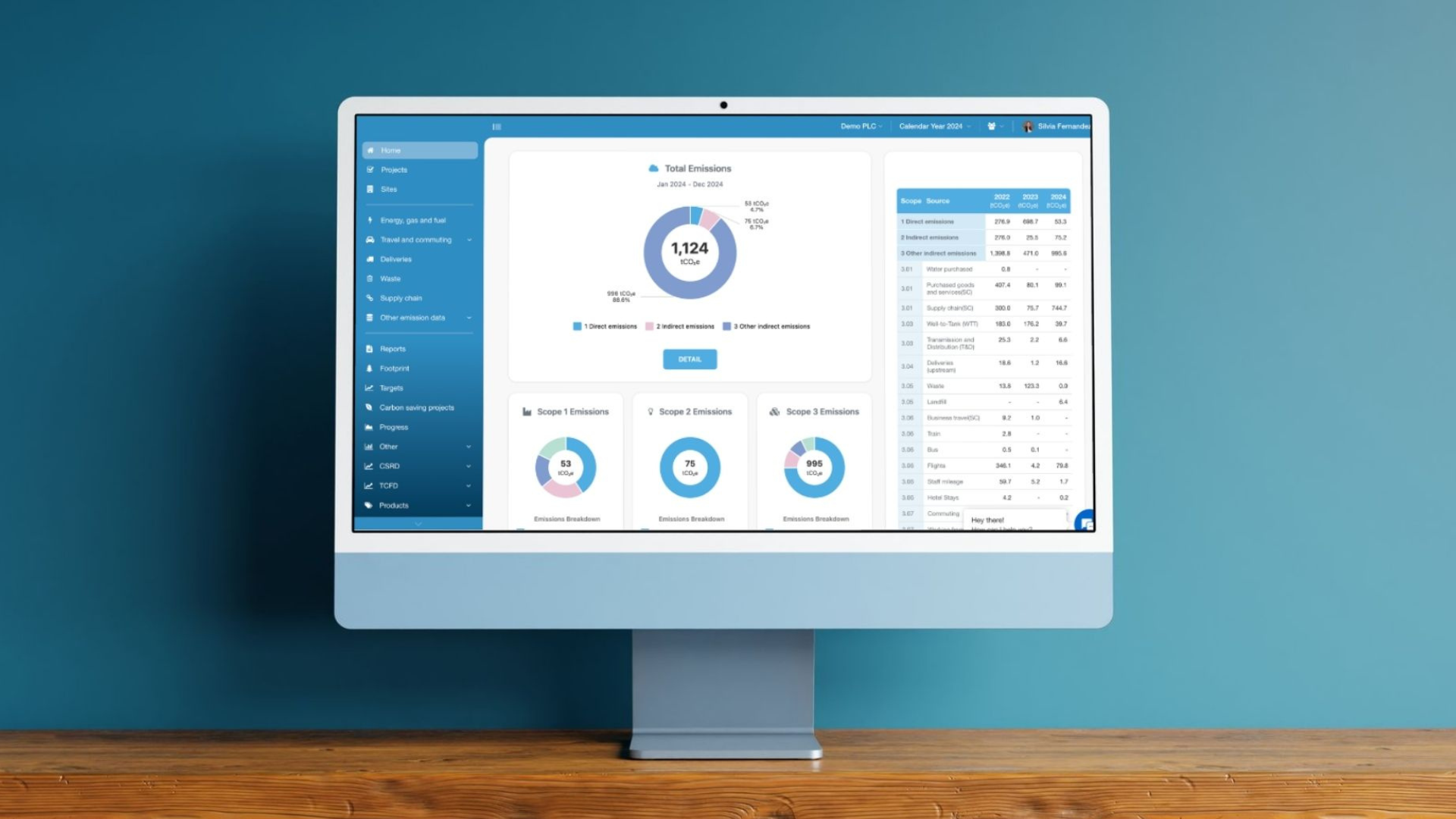
If you make and sell products, you are increasingly being asked to put a number on their carbon footprint. It comes up in tenders, in supplier questionnaires from large customers, and in the reporting rules those customers now have to follow. A footprint per product is quietly becoming the norm.
The catch, until recently, was that producing one properly was slow and expensive.
Why the Traditional Method was Slow
A traditional consultant-led Life Cycle Assessment is thorough, but slow. Gathering data, mapping how a product is made, used and disposed of, and modelling the emissions at each stage manually, could take several weeks to complete and cost between £5,000 and £15,000 per product.
At that price, it does not scale to a wide range of products, so most businesses measured one or two and left the rest. The issue was that the ones they left out were often exactly what a tender or a customer asked about. Missing products meant missing bids, and missing bids meant missing business.
For years, this was simply the price of doing it properly, until now.

The New Method Using Enistic AI
The slowest part of an assessment is the data work. This is where AI comes in. Instead of starting from a blank page, you give Enistic AI something you already have: a product page, a spec sheet or a bill of materials. It scans the data, identifies the materials and processes involved, maps the product’s life cycle, and produces an ISO 14067-aligned footprint in minutes, not weeks.
That removes both of the traditional barriers at once. You no longer have to chase supply chain data, wrestle with spreadsheets or choose which two products to assess, and the cost is a fraction of the old figure. You can produce a footprint for any product the moment someone asks, while the tender conversation is still live.

But Doesn’t AI Make Mistakes?
It’s a fair question, and the honest answer is that yes, AI on its own can get this wrong. A footprint nobody trusts is worth nothing, especially when a customer or auditors is going to check how it was produced.
That is why at Enistic, AI never has the final say. Every footprint is reviewed in depth by a named consultant, a real person assigned to you know who knows your business, not an anonymous Helpdesk. They verify the assumptions and the data beforehand. The model itself is built the standards a consultant works to: ISO 14067 for Product Carbon Footprints (PCFs) and EN 15804 for Environmental Product Declarations (EPDs), and where a product needs a formally verified EPD, it goes to an independent accredited verifier for sign-off.
Enistic AI does the fast, repetitive work, our expert consultants maintain the quality.

What You Actually Get
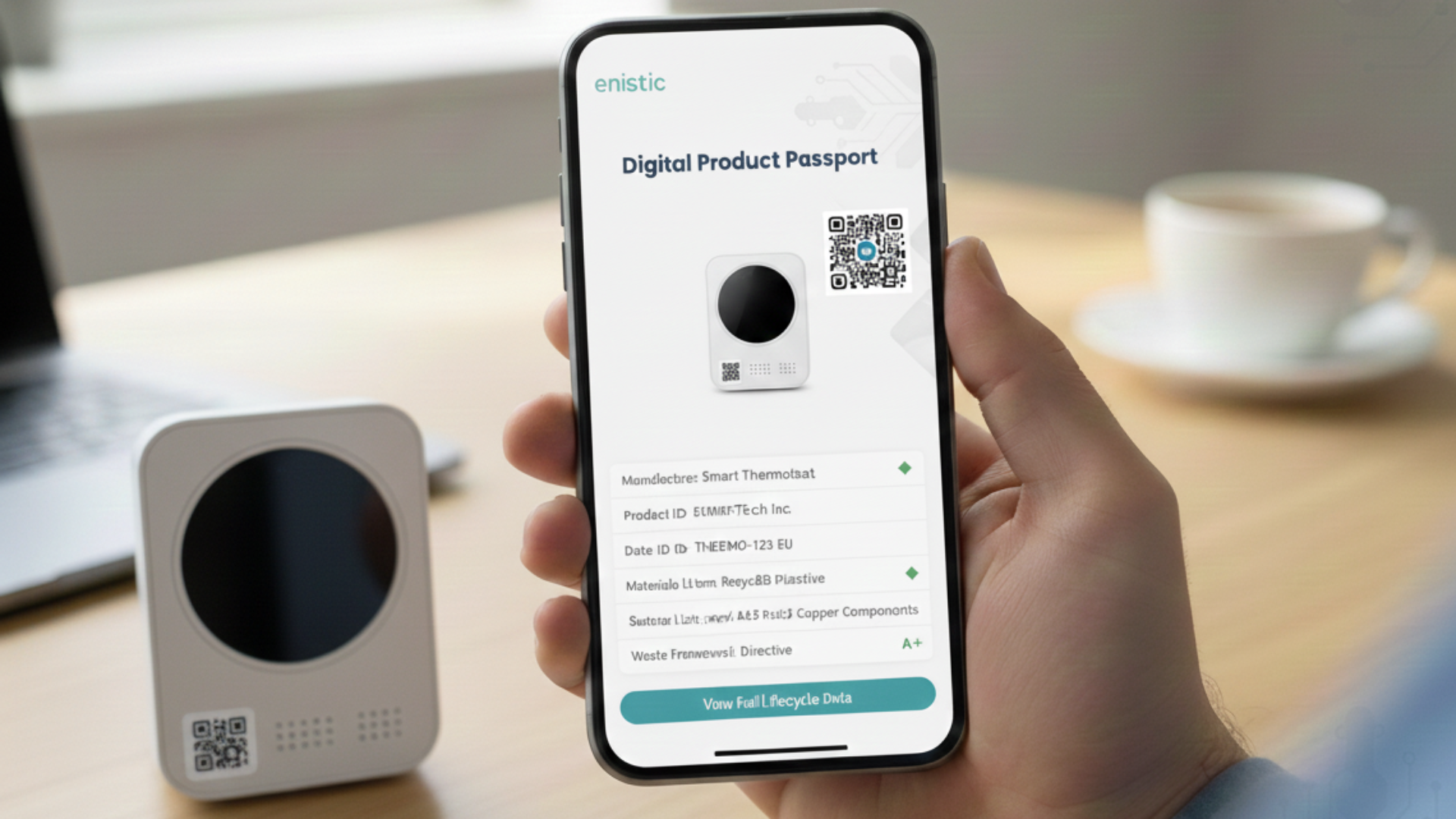
Different requests can involve different things, so it helps to know the options. A Product Carbon Footprint (PCF), is the underlying number, and it is often enough to answer a customer or a buyer. An Environmental Product Declaration (EPD) is the formally verified version that some tenders and standards require. A Digital Product Passport (DPP) is a living record that can sit behind a QR code and update as the data changes. One model can feed all three, so you are not commissioning fresh work every time the request changes slightly.
What It Means For You
When a footprint no longer takes weeks or breaks the bank, a few things become straightforward:
- You can answer a tender or a customer inside the deadline, not weeks after it has closed.
- You can cover you whole product range rather than a single example.
- Smaller businesses can do work that once needed a consultancy budget.
- Footprints remain current as energy grids and suppliers change, instead of going out-of-date the day they are produced.
- You can see where a product’s emissions come from, which is the first step to tackling wider ESG tasks.

How Enistic Can Help
Enistic has been helping businesses with compliance and carbon management since 2002, with a 100% compliance record across 5,000 reports. For product carbon, that experience sits behind Enistic AI. In practice, this means:
- Footprints, PCFs, EPDs, and DPPs produced from one platform, built to ISO 14067, EN 15804 and ISO 14025.
- In-house consultants and assessors, never outsourced, so your data and your point of contact stay in one place.
- Pricing from £40 per product, with portfolio rates across a full range, up to 90% less than a traditional consultancy assessment.
If product carbon data is starting to land on your desk, the simplest next step is to get in touch and send us one product and see what comes back, free of charge.